

Plant Bowls & Planters Made of Corten Steel – How to Plant Them Properly
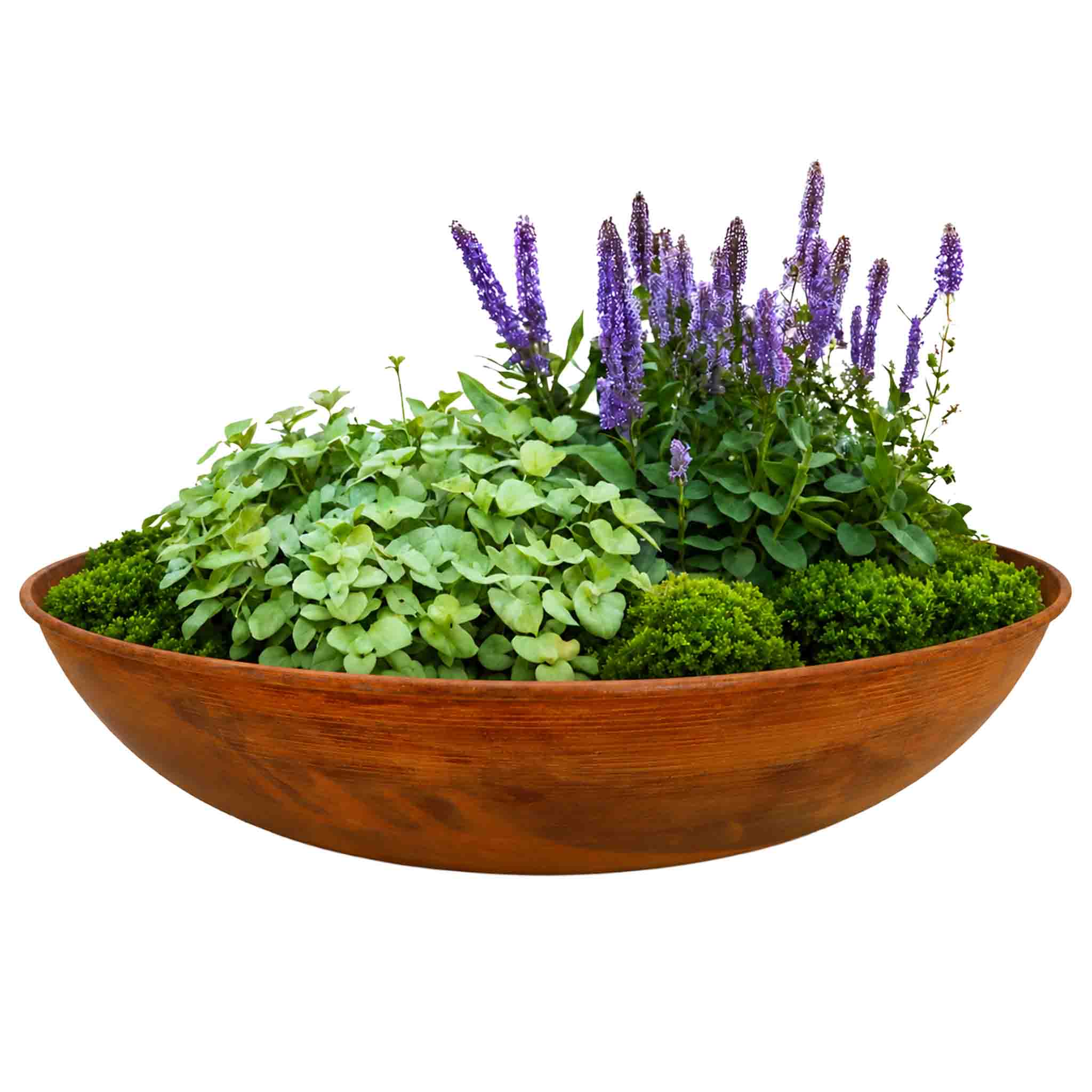
A rusty plant bowl is quick to plant – and easier than many people think. For your plants to grow healthily and for the bowl to stay beautiful for a long time, you don’t need a gardening degree or a lot of effort. We’ll show you step by step how it works, very simply, with a shallow plant bowl and with a column with plant bowl – and what you should additionally keep in mind for larger planters and raised beds.
🌿 At a glance
- Our planter bowls already have a drainage hole – no drilling required.
- Shallow bowl: Insert bubble wrap, add soil, plant. Done.
- Bird bath? Never put water directly on the rust – place a glass bowl inside.

How to plant a shallow planter bowl in just a few steps
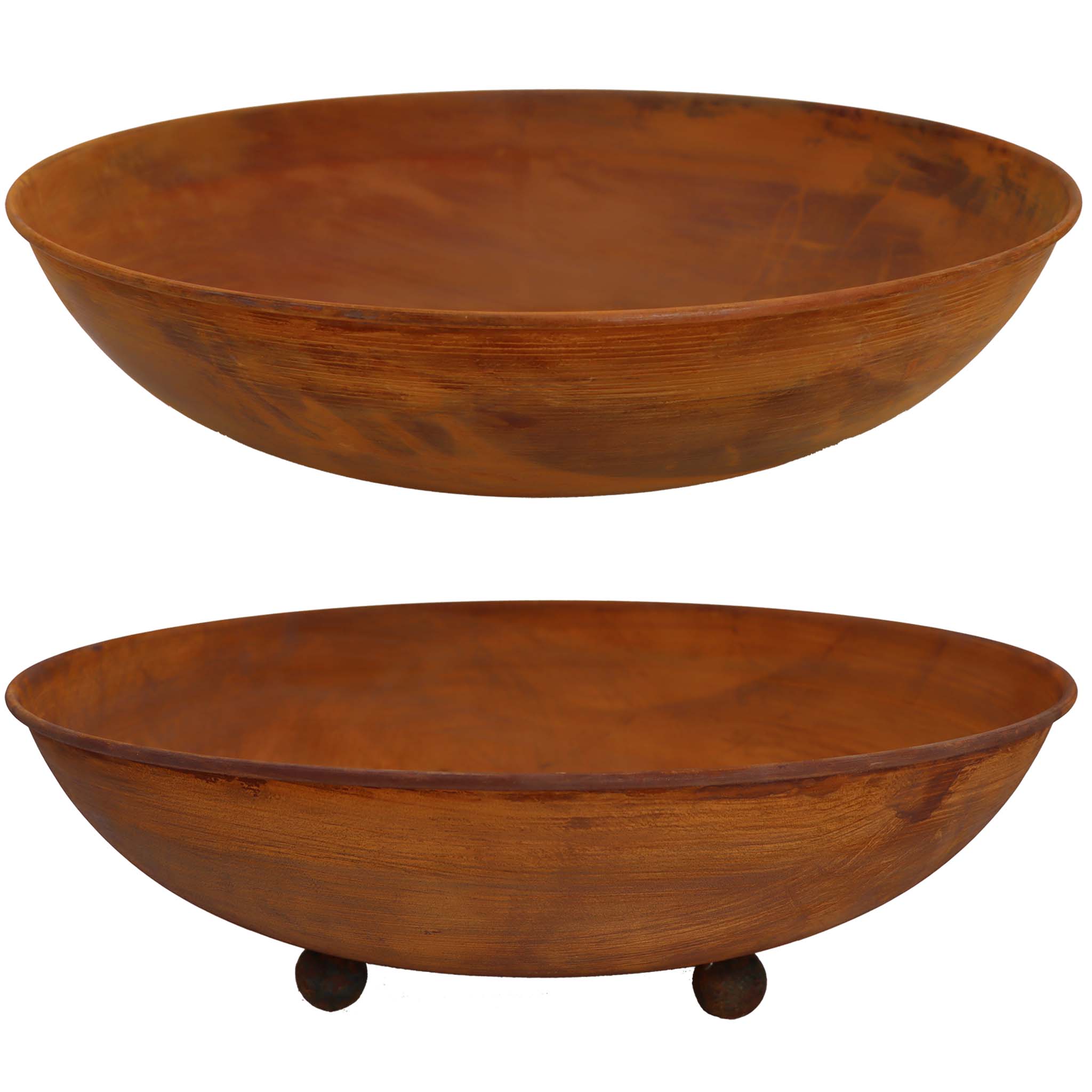
You don’t need to overcomplicate a shallow planter bowl. With just a few simple steps, everything is ready:

- Insert bubble wrap: A layer of bubble wrap at the bottom protects the metal from the soil’s constant moisture and keeps the inside of the bowl looking good for longer. Leave the drainage hole uncovered.
- Fill with soil & plant: Add loose potting soil, insert plants, press down lightly. Fill to about 2–3 cm below the rim – this prevents water from spilling over when watering.
- Done: Water in, done. If you like, decorate with a bit of moss or small stones.
Planting a column with planter bowl
It’s just as easy with our columns with attached bowls – the bowl can simply be removed, planted comfortably and put back on:

Planting troughs & raised beds made of Corten steel
The deeper the container, the more important a good structure becomes – otherwise waterlogging can easily build up at the bottom. For a planter trough or a raised bed made of Corten steel, you should therefore work in layers:
| Layer (from the bottom) | Material | What for? |
|---|---|---|
| 1. Drainage | Coarse gravel, expanded clay or lava stones | Water drains away and doesn’t pool at the bottom |
| 2. Separation fleece | Water-permeable weed control fabric | Keeps soil and drainage separate while letting water through |
| 3. Coarse filling material (for tall raised beds) | Shredded material, branches, coarse compost | Saves soil, provides nutrients and warmth |
| 4. Soil | Loose flower or vegetable soil | Growing medium for the plants, up to 2–3 cm below the rim |

A raised bed has a great advantage: you can garden at a comfortable height without bending down. You can plant it all year round – lettuce, radishes and herbs in spring, tomatoes, cucumbers, strawberries and zucchini in summer, lamb’s lettuce or spinach in autumn. A colorful mix of vegetables, herbs and a few flowers along the edge also looks beautiful and attracts insects at the same time.
They store water and keep it in constant contact with the metal. For a thin drainage layer right at the bottom, expanded clay is fine – but it’s not recommended as a large-volume filler for the entire container.
We manufacture our raised beds and large planters made of Corten steel as custom-made piece – in your desired dimensions and, if you wish, even with your own lettering (like the “Einfach sauguad” above). Just tell us what you have in mind and we’ll prepare an offer for you. ➜ More about our custom-made pieces or directly by phone at +49 9672 8019882 or info@edelrostshop.de.
What can I plant in a rusty bowl?
The good news: almost anything. The warm rust tone suits many styles and plants. Popular choices include, for example:
Geraniums, petunias or pansies – for vibrant color throughout the year.
Low-maintenance and a beautiful, natural contrast to the rust.
Rosemary, thyme, sage or chives – decorative and always within easy reach for the kitchen.
Lavender, catmint, chives or bellflowers attract bees and butterflies – native and close to nature.
💚 Tip for insect lovers: Even a flowering chive plant or a bit of thyme is a valuable bee pasture – if you choose native, bee-friendly species, you’ll be helping insects almost automatically.
In the end, it’s your taste that counts: whether lushly mixed or simple with just one variety – in a rusty bowl, both look great.
And it doesn’t always have to be soil: a shallow rust bowl also makes a striking decorative bowl – indoors or outdoors. Arrange stones, moss, twigs, cones or a decorative sphere and you’ll have an atmospheric arrangement for your table, windowsill or patio in no time. This way you can use the bowl all year round, even without planting.

🐦 Rust bowl as a bird bath? How to do it right
A shallow rust bowl looks beautiful as a bird bath – with one simple trick. Do not pour the water directly into the rust bowl: standing water can react with the rust and darken the area over time. This is completely normal and not a defect – but not ideal for a bird bath.
The nicer solution: place a glass bowl or shallow glass insert inside the rust bowl and fill only that with water. On the outside, the warm rust look; on the inside, clean water in glass – which you can remove at any time and easily clean.

Rust & Surfaces – What You Should Know
Corten steel develops its protective noble-rust patina in the open air. In the first few weeks – especially after rain – some rust water may run off. This is completely normal and stops once the patina has matured.

❓ Frequently asked questions about planting
Do I have to drill a hole in the bowl?
No. Our planter bowls already have a drainage hole in the base – excess water drains off by itself.
Do I need a drainage layer in a bowl?
Generally no. For a shallow bowl, bubble wrap and soil are sufficient. A drainage layer of gravel only becomes worthwhile for deeper planters and raised beds.
Why bubble wrap instead of just soil?
The foil keeps the soil’s constant moisture away from the metal and helps the bowl stay nice on the inside for longer. It’s not mandatory – but it protects the container.
Can I leave the bowl outside all year round?
Yes. Corten steel is weatherproof and frost-resistant. In periods of continuous frost, it’s advisable to raise the container slightly so that excess water doesn’t freeze at the bottom.
Will the rust stain my patio?
In the first few weeks, some rust water may run off. On sensitive surfaces (light stone, wood), place the bowl on a mat or feet.
Can I use the bowl as a bird bath?
Yes, but don’t pour the water directly into it – standing water can stain the rust and make that area darker. Instead, place a glass bowl inside the rusted bowl and fill only the glass bowl with water. This way, the rust look is preserved, the water stays clean, and you can easily clean the glass bowl.
Which soil should I use?
Normal, loose potting soil is perfectly sufficient. The only important thing is that it drains well and doesn’t compact.
You might also like:
➜ What is rust decor & Corten steel?
➜ Materials & manufacturing at Rostikal